Learning new skills quickly is an important ability in today’s fast-changing world. Whether someone wants to improve their career, start a business, or gain knowledge in a new field, the ability to learn efficiently can make a major difference. Scientific research in psychology and neuroscience has shown that certain learning techniques can significantly improve memory, understanding, and skill development.
Focus on One Skill at a Time
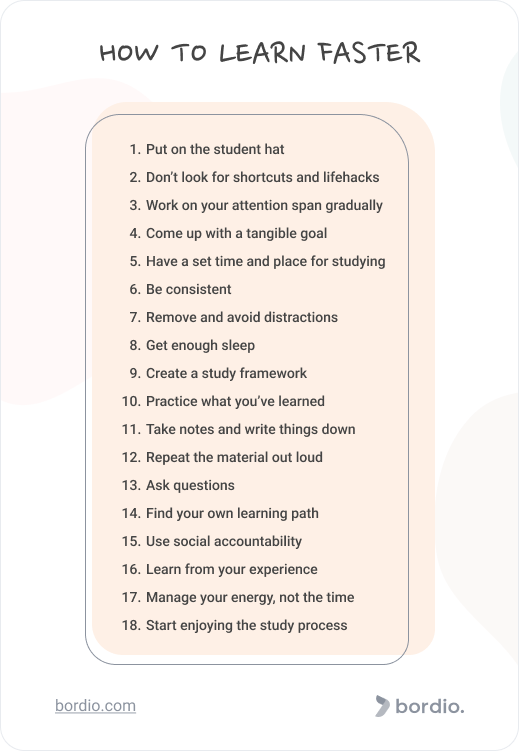
One of the most effective learning strategies is focusing on a single skill instead of trying to learn multiple things at once. When attention is divided between many subjects, the brain struggles to retain information effectively.
Concentrating on one skill allows deeper understanding and faster improvement.
Use Active Learning
Active learning involves engaging directly with the material instead of passively reading or watching. Activities such as solving problems, writing notes, teaching others, or applying concepts help strengthen memory and understanding.
Research shows that active learning improves long-term retention more effectively than passive learning methods.
Practice Consistently
Consistent practice is essential for mastering any skill. Repetition strengthens neural connections in the brain, making it easier to perform tasks more efficiently.
Short daily practice sessions are often more effective than long sessions done occasionally.
Break Skills Into Smaller Parts
Complex skills can be easier to learn when they are divided into smaller components. Instead of trying to master everything at once, focusing on individual steps helps build confidence and progress gradually.
For example, when learning a language, focusing first on vocabulary and pronunciation before advanced grammar can simplify the process.
Use the Spaced Repetition Method
Spaced repetition is a learning technique that involves reviewing information at increasing intervals over time. This method helps strengthen memory and prevents forgetting.
Many language learning apps and educational platforms use spaced repetition systems to help users remember information more effectively.
Learn by Teaching Others
Teaching a concept to someone else is one of the best ways to reinforce understanding. Explaining information forces the brain to organize knowledge clearly and identify gaps in understanding.
Students who teach others often remember information better than those who only study independently.
Minimize Distractions During Learning
Focused attention is essential for effective learning. Studying in environments with constant distractions reduces concentration and slows progress.
Creating a quiet study space and limiting digital interruptions can improve learning efficiency.
Get Enough Rest and Sleep
Sleep plays a crucial role in memory consolidation and brain function. During sleep, the brain processes and stores information learned during the day.
Adequate rest improves concentration, creativity, and the ability to solve problems.
Track Your Progress
Monitoring progress helps maintain motivation and identify areas that need improvement. Keeping track of milestones and achievements encourages continued learning.
Progress tracking also helps learners adjust strategies if certain methods are not effective.
FAQs
What is the fastest way to learn a new skill?
Focused practice, active learning, and spaced repetition are among the most effective methods for learning new skills quickly.
How long does it take to learn a new skill?
The time required varies depending on the complexity of the skill and the amount of practice. Consistent learning significantly speeds up the process.
Why is practice important when learning?
Practice strengthens neural connections in the brain, making skills easier to perform over time.
Learning new skills efficiently requires the right strategies, consistent practice, and focused attention. By using science-based learning methods, individuals can improve their ability to acquire knowledge and develop valuable skills more quickly.
About the Author