How Cloud Computing Works (Beginner Friendly Guide)
Cloud computing has become a major part of modern technology, allowing individuals and businesses to store data, run applications, and access services through the internet instead of relying on local computers or servers. From online storage to streaming platforms and business software, cloud computing powers many of the digital services used every day.
What Is Cloud Computing?
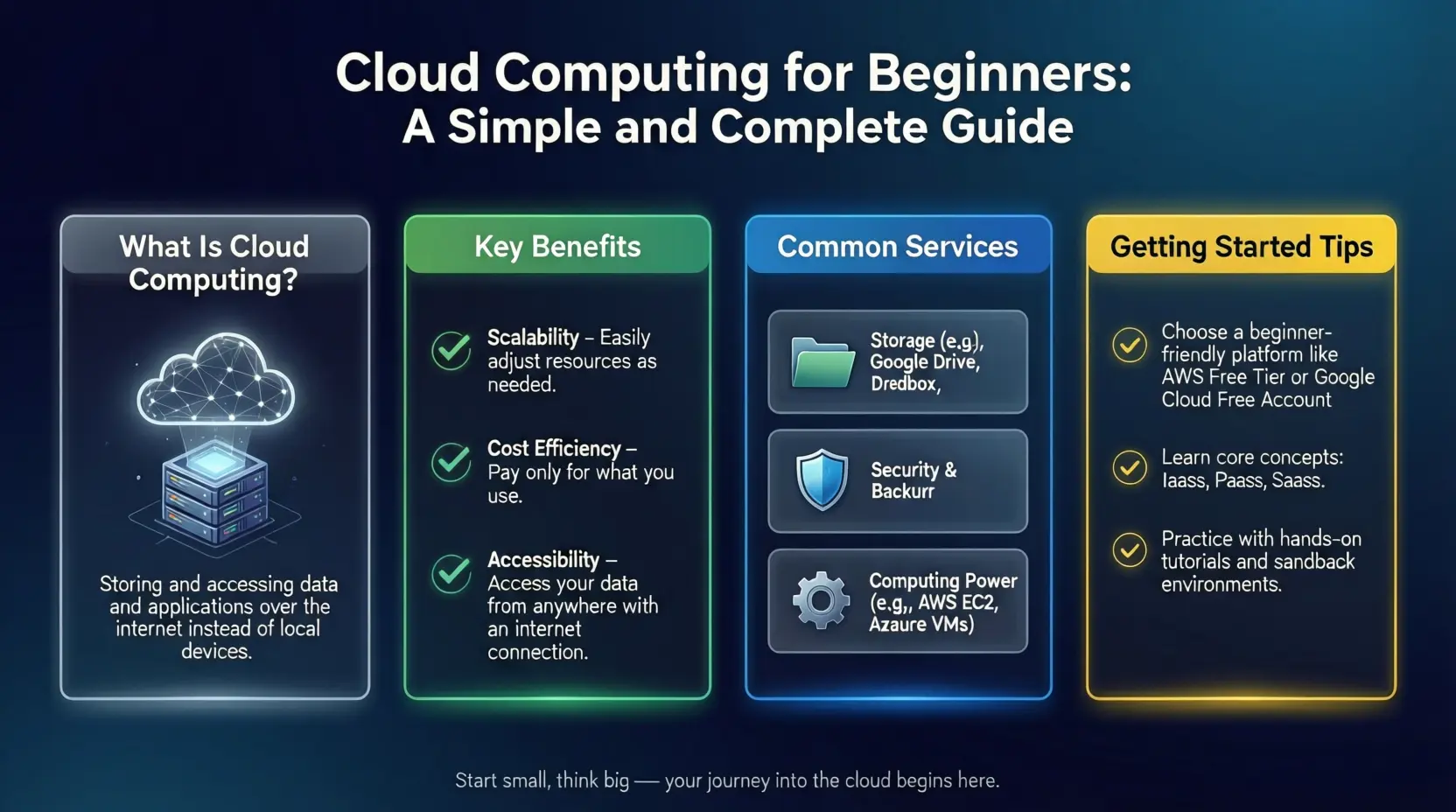
Cloud computing is the delivery of computing services such as storage, databases, networking, and software over the internet. Instead of storing data on a personal computer or local server, users can store and access information through remote servers hosted by cloud providers.
These servers are located in large data centers around the world and allow users to access data anytime using an internet connection.
How Cloud Computing Works
Cloud computing works through a network of remote servers that store and process data. When a user uploads files or runs applications online, the data is sent to cloud servers where it is stored and managed.
Users can then access their files or applications through web browsers, mobile apps, or software platforms. Because the processing happens on remote servers, users do not need powerful hardware to run cloud-based applications.
Types of Cloud Computing Services
Infrastructure as a Service (IaaS)
Infrastructure as a Service provides virtual servers, storage, and networking resources through the cloud. Businesses use IaaS to run applications without managing physical hardware.
Platform as a Service (PaaS)
Platform as a Service provides a development environment where developers can build, test, and deploy applications. This allows developers to focus on coding without managing underlying infrastructure.
Software as a Service (SaaS)
Software as a Service delivers software applications through the internet. Users access these applications through web browsers without installing them on their devices.
Examples include email services, document editing tools, and project management platforms.
Benefits of Cloud Computing
Cloud computing offers several advantages for individuals and organizations. One major benefit is accessibility, as users can access their data and applications from anywhere with an internet connection.
Cloud services also reduce the need for expensive hardware and IT infrastructure. Businesses can scale resources up or down depending on their needs, which makes cloud computing cost-efficient.
Another benefit is automatic updates and maintenance handled by cloud providers, reducing technical management responsibilities.
Examples of Cloud Computing
Many everyday services rely on cloud computing technology. Online storage platforms allow users to store files in the cloud and access them across multiple devices.
Streaming services store media files on cloud servers and deliver content instantly to viewers. Business applications such as project management tools and communication platforms also operate through cloud infrastructure.
Security in Cloud Computing
Cloud providers implement strong security measures to protect user data. These include encryption, secure authentication systems, and advanced monitoring technologies to prevent unauthorized access.
While cloud platforms provide strong security, users should also follow good practices such as using strong passwords and enabling two-factor authentication.
Cloud Computing for Businesses
Businesses use cloud computing to improve efficiency, collaboration, and scalability. Cloud-based software allows teams to work on documents simultaneously and access data from anywhere.
Companies can also store large amounts of data, run analytics tools, and deploy applications without investing heavily in physical servers.
FAQs
What is cloud computing in simple terms?
Cloud computing means storing and accessing data or applications through the internet instead of using a local computer or physical server.
What are examples of cloud services?
Examples include online storage platforms, streaming services, email services, and web-based applications used for business and collaboration.
Is cloud computing safe?
Cloud providers use advanced security technologies to protect data, but users should also follow security best practices to keep their accounts secure.
Cloud computing has transformed how people store data, run software, and access digital services. As technology continues to evolve, cloud computing will remain a fundamental part of the modern digital world.